 Français
 English
 Español
 Русский
 中文
 Türkçe
 اردو
 Italiano
 Deutsch
 العربية
Hadiths en anime
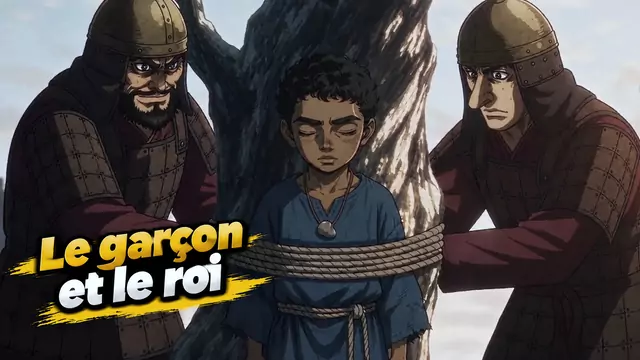
Le garçon et le roi
Source et authenticité: Sahih Muslim 3005Sahih (authentic)
- Recueil
- Sahih Muslim
- Rapporteur
- Sahih Muslim 3005Référence dans le livre: Book 55 (The Book of Zuhd and Softening of Hearts), Hadith 93
- Authenticité
- Sahih (authentic)Sahih Muslim 3005, Ibn Kathir, Jami` at-Tirmidhi 3340
- Également rapporté dans
- Jami` at-Tirmidhi 3340
Traduction : Qabas
Ouvrir sur sunnah.comUn roi avait un vieux sorcier, qui lui demanda un garçon à instruire. Sur son chemin, le garçon rencontra un moine et en vint à croire en Allah. Quand une bête énorme barra la route aux gens, il invoqua Allah et la tua d'une pierre. Il guérissait les aveugles et les lépreux, en disant toujours que c'est Allah qui guérit. Le roi tortura ceux qui avaient cru et tenta deux fois de tuer le garçon, sur une montagne et en mer, et deux fois Allah le sauva. Alors le garçon révéla au roi le seul moyen de le tuer : devant tout le peuple, en disant « Au nom d'Allah, Seigneur du garçon ». Le roi le fit, le garçon mourut, et les gens crurent. Une histoire sur la constance et sur la confiance en Allah seul, rappelée dans la sourate al-Burûj.
Audio original en arabe et doublage en 9 langues : choisis avec le bouton audio sur la vidéo, et les sous-titres avec le bouton CC. Aucun compte n'est nécessaire pour regarder.
Le hadith
Traduction : Qabas · Sahih Muslim 3005
Traduction anglaise vérifiée
Suhaib reported that Allah's Messenger (ﷺ) thus said:There lived a king before you and he had a (court) magician. As he (the magician) grew old, he said to the king: I have grown old, send some young boy to me so that I should teach him magic. He (the king) sent to him a young man so that he should train him (in magic). And on his way (to the magician) he (the young man) found a monk sitting there. He (the young man) listened to his (the monk's) talk and was impressed by it. It became his habit that on his way to the magician he met the monk and set there and he came to the magician (late). He (the magician) beat him because of delay. He made a complaint of that to the monk and he said to him: When you feel afraid of the magician, say: Members of my family had detained me. And when you feel afraid of your family you should say: The magician had detained me. It so happened that there came a huge beast (of prey) and it blocked the way of the people, and he (the young boy) said: I will come to know today whether the magician is superior or the monk is superior. He picked up a stone and said: O Allah, if the affair of the monk is dearer to Thee than the affair of the magician, cause death to this animal so that the people should be able to move about freely. He threw that stone towards it and killed it and the people began to move about (on the path freely). He (the young man) then came to that monk and Informed him and the monk said: Sonny, today you are superior to me. Your affair has come to a stage where I find that you would be soon put to a trial, and in case you are put to a trial don't give my clue. That young man began to treat the blind and those suffering from leprosy and he in fact began to cure people from (all kinds) of illness. When a companion of the king who had gone blind heard about him, he came to him with numerous gifts and said: If you cure me all these things collected together here would be yours. Be said: I myself do not cure anyone. It is Allah Who cures and if you affirm faith in Allah, I shall also supplicate Allah to cure you. He affirmed his faith in Allah and Allah cured him and he came to the king and sat by his side as he used to sit before. The king said to him: Who restored your eyesight? He said: My Lord. Thereupon he said: It means that your Lord is One besides me. He said: My Lord and your Lord is Allah, so he (the king) took hold of him and tormented him till he gave a clue of that boy. The young man was thus summoned and the king said to him: O boy, it has been conveyed to me that you have become so much proficient in your magic that you cure the blind and those suffering from leprosy and you do such and such things. Thereupon he said: I do not cure anyone; it is Allah Who cures, and he (the king) took hold of him and began to torment him. So he gave a clue of the monk. The monk was thus summoned and it was said to him: You should turn back from your religion. He, however, refused to do so. He (ordered) for a saw to be brought (and when it was done) he (the king) placed it in the middle of his head and tore it into parts till a part fell down. Then the courtier of the king was brought and it was said to him: Turn back from your religion. Arid he refused to do so, and the saw was placed in the midst of his head and it was torn till a part fell down. Then that young boy was brought and it was said to him: Turn back from your religion. He refused to do so and he was handed over to a group of his courtiers. And he 'said to them: Take him to such and such mountain; make him climb up that mountain and when you reach its top (ask him to renounce his faith) but if he refuses to do so, then throw him (down the mountain). So they took him and made him climb up the mountain and he said: O Allah, save me from them (in any way) Thou likest and the mountain began to quake and they all fell down and that person came walking to the king. The king said to him: What has happened to your companions? He said: Allah has saved me from them. He again handed him to some of his courtiers and said: Take him and carry him in a small boat and when you reach the middle of the ocean (ask him to renounce) his religion, but if he does not renounce his religion throw him (into the water). So they took him and he said: O Allah, save me from them and what they want to do. It was quite soon that the boat turned over and they were drowned and he came walking to the king, and the king said to him: What has happened to your companions? He said: Allah has saved me from them, and he said to the king: You cannot kill me until you do what I ask you to do. And he said: What is that? He said: You should gather people in a plain and hang me by the trunk (of a tree). Then take hold of an arrow from the quiver and say: In the name of Allah, the Lord of the young boy; then shoot an arrow and if you do that then you would be able to kill me. So he (the king) called the people in an open plain and tied him (the boy) to the trunk of a tree, then he took hold of an arrow from his quiver and then placed the arrow in the bow and then said: In the name of Allah, the Lord of the young boy; he then shot an arrow and it bit his temple. He (the boy) placed his hands upon the temple where the arrow had bit him and he died and the people said: We affirm our faith in the Lord of this young man, we affirm our faith in the Lord of this young man, we affirm our faith in the Lord of this young man. The courtiers came to the king and it was said to him: Do you see that Allah has actually done what you aimed at averting. They (the people) have affirmed their faith in the Lord. He (the king) commanded ditches to be dug at important points in the path. When these ditches were dug, and the fire was lit in them it was said (to the people): He who would not turn back from his (boy's) religion would be thrown in the fire or it would be said to them to jump in that. (The people courted death but did not renounce religion) till a woman came with her child and she felt hesitant in jumping into the fire and the child said to her: 0 mother, endure (this ordeal) for it is the Truth.
English translation by Abdul Hamid Siddiqui, as published on Sunnah.com.
Source et authenticité
- Rapporteur
- Sahih Muslim 3005 (Référence dans le livre: Book 55 (The Book of Zuhd and Softening of Hearts), Hadith 93)
- Également rapporté dans
Jami` at-Tirmidhi 3340 (Book 47 (Chapters on Tafsir), Hadith 392)In the chapter on Surat al-Buruj, through Ma'mar from Thabit al-Bunani from 'Abd al-Rahman ibn Abi Layla from Suhaib, the same chain as Muslim's after Thabit. Here the king's man is a soothsayer (kahin) rather than a sorcerer, some narrators say the beast was a lion, the boy asks nothing of the blind man but that he believe in the One who returns his sight, and the narration ends with the recitation of 85:4-8 and the report that the boy was buried.
- Authenticité
Sahih (authentic)
- Muslim l'a rapporté dans le Livre de l'ascétisme (zuhd) et de l'adoucissement des cœurs, au chapitre de l'histoire des gens du Fossé, du sorcier, du moine et du garçon (n° 3005), par Hammâd ibn Salama, d'après Thâbit, d'après 'Abd ar-Rahmân ibn Abî Laylâ, d'après Suhayb. Ibn Kathîr, sur 85:4, le donne d'après l'imam Ahmad, d'après Suhayb, et ajoute que Muslim l'a aussi rapporté à la fin de son Sahîh.[1][4]
- At-Tirmidhî l'a rapporté dans ses chapitres d'exégèse (tafsîr), à la sourate al-Burûj (n° 3340), par Ma'mar, d'après Thâbit al-Bunânî, avec la même chaîne jusqu'à Suhayb, et a dit : ce hadith est bon et isolé (hasan gharîb). Sunnah.com donne pour cette version le jugement de Darussalam : authentique (sahîh).[2]
Sources
- [1] Sahih Muslim 3005, The Book of Zuhd and Softening of Hearts, Sunnah.com (consulté le 2026-10-22)Suhaib's narration; Arabic text and English translation (Abdul Hamid Siddiqui).
- [2] Jami` at-Tirmidhi 3340, Chapters on Tafsir (Surat al-Buruj), Sunnah.com (consulté le 2026-10-22)Ma'mar's narration from Thabit al-Bunani; Arabic text and English translation (Darussalam), graded sahih (Darussalam).
- [3] Al-Nawawi, Sharh Sahih Muslim (al-Minhaj), vol. 18, pp. 420-421 (Book of Zuhd and Softening of Hearts, chapter: the story of the People of the Ditch, the sorcerer, the monk and the boy, commentary on Sahih Muslim 3005), Islamweb.net library (Dar al-Khayr edition, 1416 AH / 1996, page numbers as printed) (consulté le 2026-10-22)Arabic, summarised and translated by Qabas Academy.Pages consultées : pp. 420-421
- [4] Ibn Kathir, Tafsir al-Qur'an al-'Azim (Abridged), English, on Surah al-Buruj, Quran.com (consulté le 2026-10-22)The abridged English translation of Ibn Kathir's Tafsir al-Qur'an al-'Azim, as shown on Quran.com under "Ibn Kathir (Abridged)". Quran.com shows the commentary on 85:1-10 as one group; the page opened for each cited verse is listed. Summarised in our own words.Pages consultées, par verset : 85:4, 85:10
- [5] Quran 85:4-10, Surah Al-Buruj, Quran.com (consulté le 2026-10-22)Arabic text (Uthmani script) and English translation by Saheeh International.Pages consultées, par verset : 85:8, 85:10
Explication
- Le Messager d'Allah (paix et salut sur lui) a parlé d'un roi, parmi ceux qui nous ont précédés, qui avait un sorcier. Devenu vieux, le sorcier demanda au roi de lui envoyer un garçon pour lui enseigner la sorcellerie. En se rendant chez le sorcier, le garçon trouva un moine, s'assit auprès de lui, écouta ses paroles et en fut charmé ; dès lors, il s'arrêtait chez le moine chaque fois qu'il passait.[1][4]
- Le sorcier battait le garçon parce qu'il arrivait en retard, et le moine lui dit : si tu crains le sorcier, dis que ta famille t'a retenu, et si tu crains ta famille, dis que le sorcier t'a retenu. An-Nawawî (Sharh Sahîh Muslim, vol. 18, p. 420) en déduit qu'il est permis de dire ce qui n'est pas vrai à la guerre et dans les cas semblables, et pour sauver une vie de la perte, la sienne ou celle de toute personne dont la vie est sacrée.[1][3]
- Un jour, une bête énorme barrait la route aux gens, et le garçon dit : « Aujourd'hui, je saurai qui est le meilleur : le sorcier ou le moine. » Il prit une pierre et demanda à Allah, si la voie du moine Lui était plus chère que celle du sorcier, qu'elle tue la bête afin que les gens puissent passer ; il la lança, la bête mourut et les gens reprirent leur chemin. Dans la version d'at-Tirmidhî, certains dirent que la bête était un lion. An-Nawawî (vol. 18, p. 420) dit que le hadith établit les karâmât, les prodiges qu'Allah accorde à Ses amis vertueux.[1][2][3]
- Le moine lui dit : « Mon fils, aujourd'hui tu es meilleur que moi », l'avertit qu'il serait mis à l'épreuve et lui demanda, s'il l'était, de ne conduire personne jusqu'à lui.[1]
- Le garçon se mit à soigner les aveugles et les lépreux, et des gens atteints de toutes sortes de maladies. An-Nawawî (vol. 18, p. 420) explique que le mot employé ici pour l'aveugle (al-akmah) désigne l'aveugle de naissance. Un courtisan du roi devenu aveugle vint avec de nombreux présents et les lui promit tous s'il le guérissait. Le garçon répondit : « Je ne guéris personne ; c'est Allah seul qui guérit », et dit que s'il croyait en Allah, il invoquerait Allah pour lui. Dans la version d'at-Tirmidhî, il lui dit qu'il ne veut pas cela de lui.[1][2][3]
- Le courtisan crut en Allah, et Allah le guérit. Il revint s'asseoir auprès du roi comme auparavant ; quand le roi lui demanda qui lui avait rendu la vue, il répondit que c'était son Seigneur, et quand le roi lui demanda s'il avait un Seigneur autre que lui, il dit : « Mon Seigneur et ton Seigneur, c'est Allah. » Le roi le tortura jusqu'à ce qu'il dénonce le garçon, puis tortura le garçon, qui répétait que seul Allah guérit, jusqu'à ce qu'il dénonce le moine.[1]
- On ordonna au moine de renoncer à sa religion ; il refusa, et le roi le fit mettre à mort ; puis on dit la même chose au courtisan, il refusa et fut mis à mort de la même façon. Tous deux donnèrent leur vie plutôt que de renoncer à leur foi en Allah.[1][2]
- Le garçon refusa lui aussi, et le roi le livra à un groupe de ses hommes pour qu'ils le fassent monter sur une montagne et le précipitent du sommet s'il ne renonçait pas. Là, le garçon invoqua : « Ô Allah, délivre-moi d'eux par ce que Tu voudras. » La montagne trembla, ils tombèrent, et il revint à pied jusqu'au roi. Quand le roi lui demanda ce qu'étaient devenus les soldats qu'il avait envoyés avec lui, le garçon répondit : « Allah m'a délivré d'eux. » An-Nawawî (vol. 18, p. 420) explique que le sommet (dhurwa) est le haut de la montagne, et que « trembla » signifie qu'elle fut violemment secouée.[1][3]
- Puis le roi le fit emmener au milieu de la mer dans une petite barque, pour qu'on l'y jette s'il ne renonçait pas. Le garçon fit la même invocation, la barque chavira et ceux qui l'emmenaient se noyèrent, et de nouveau il revint à pied. An-Nawawî (vol. 18, p. 420) explique que le qurqûr est un petit navire, le sens qu'a retenu al-Qâdî 'Iyâd, et que la barque chavira.[1][3]
- Le garçon dit au roi qu'il ne pourrait le tuer que s'il faisait ce qu'il lui dirait : rassembler les gens sur une même plaine, l'attacher à un tronc, prendre une flèche de son carquois et dire : « Au nom d'Allah, Seigneur du garçon ». Le roi le fit, la flèche atteignit le garçon à la tempe ; il y porta la main et mourut. An-Nawawî (vol. 18, p. 420) explique que la plaine (sa'îd) désigne ici une terre découverte et élevée. Les gens s'écrièrent trois fois : « Nous croyons au Seigneur du garçon ! »[1][3]
- On dit au roi que ce qu'il redoutait s'était abattu sur lui : les gens avaient cru. An-Nawawî (vol. 18, p. 421) explique que l'ukhdûd est une grande tranchée dans la terre, et que les tranchées furent creusées à l'embouchure des routes, à leurs entrées. On y alluma des feux, et quiconque ne renonçait pas à sa religion devait y être jeté. Ibn Kathîr, sur 85:4, ajoute qu'Allah a décrété ce qui est arrivé à ces serviteurs, les Siens, aux mains des mécréants, et qu'Il est le Puissant, le Digne de louange, même si la sagesse de ce décret échappe à beaucoup de gens.[1][3][4]
- Enfin vint une femme avec son enfant, qui recula devant le feu ; an-Nawawî (vol. 18, p. 421) explique qu'elle s'arrêta et resta à sa place, répugnant à y entrer. Son enfant lui dit : « Ô ma mère, sois patiente, car tu es dans la vérité. » Allah a révélé à leur sujet, dans la traduction de Hamidullah de 85:8 : « ils ne leur reprochaient que d’avoir cru en Allah, le Puissant, le Digne de louange » ; Ibn Kathîr explique qu'aux yeux de leurs persécuteurs, leur seule faute était leur foi en Allah.[1][3][4][5]
Leçons et enseignements
- Tiens bon dans ta foi sous la pression : le moine, le courtisan, le garçon et le peuple croyant ont tous refusé d'y renoncer.[1][4]
- Seul Allah guérit : les remèdes et ceux qui les donnent sont des moyens, et la guérison vient de Lui seul.[1]
- Fais le bien sincèrement, pour Allah : le garçon ne voulait ni présents ni mérite, seulement que l'homme croie en Celui qui lui rendrait la vue.[1][2]
- Le garçon n'a pas cherché la mort ; Allah l'a sauvé deux fois. Quand il a donné sa vie, c'était pour qu'un peuple entier en vienne à croire en Allah seul, et les gens du Fossé se sont attachés à cette même vérité. Leur seule faute, aux yeux de leurs persécuteurs, était leur foi en Allah.[1][4][5]
- Allah suffit à ceux qui s'en remettent à Lui : le garçon a demandé à Allah de le protéger d'eux comme Il le voudrait, et chaque fois il a pu dire qu'Allah lui avait suffi contre eux.[1]
- La porte du repentir reste ouverte : même à ceux qui ont tourmenté les croyants, Allah dit en 85:10 que le châtiment est pour ceux qui ensuite ne se sont pas repentis. Ibn Kathîr cite al-Hasan al-Basrî : voyez cette générosité et cette bonté ; ils ont tué les amis d'Allah, et Il les invite encore au repentir.[5][4]
Questions de réflexion
Ces questions sont écrites par Qabas Academy pour t'aider à réfléchir. Elles ne font partie ni du hadith ni de son commentaire.
- Le garçon a trouvé le moine sur son chemin de tous les jours, alors qu'il allait ailleurs. Qui a discrètement changé la direction de ta vie, et l'as-tu déjà remercié ?
- Alors qu'on lui offrait tous les présents de la salle, le garçon a dit que seul Allah guérit. Quand on te loue pour quelque chose de bien, comment renvoies-tu cette louange à Allah ?
- Sur la montagne et en mer, le garçon a demandé à Allah de traiter ses ennemis comme Il le voudrait. Qu'est-ce qui pèse sur toi aujourd'hui et que tu pourrais confier à Allah de la même manière ?
- Tout un peuple a cru parce qu'un jeune homme est resté fidèle. Quel petit acte de foi, constant, pourrait être pour quelqu'un la raison de se tourner vers Allah ?
Autres épisodes
 En cours de lecture7:32Hadiths en animeLe garçon et le roi
 7:17Hadiths en animeJurayj et l'invocation de sa mère
 3:30Histoires du CoranL'histoire de Gog et Magog
 2:28Hadiths en animeLe hadith de Jibrîl
 3:49Récits islamiquesLe roi et le ministre reconnaissant
 1:47Hadiths en animeL'homme qui avait tué 99 personnes
 2:11Hadiths en animeLes trois hommes pris au piège de la grotte
 2:04Hadiths en animeLe lépreux, le chauve et l'aveugle
 3:54Histoires du CoranLe Jour du Jugement
 17:11Histoires du CoranL'histoire du prophète Youssouf (paix sur lui)
 1:31Hadiths en animeL'homme qui emprunta 1 000 dinars