 中文
中文 English
 Español
 Русский
 Türkçe
 اردو
اردو Italiano
 Français
 Deutsch
圣训动画
杀了九十九人的人
出处与可靠性: Sahih Muslim 2766aSahih (authentic)
- 辑录
- Sahih Muslim
- 传述
- Sahih Muslim 2766a书内编号: Book 50 (The Book of Repentance), Hadith 54
- 评定
- Sahih (authentic)HadeethEnc, Al-Durar al-Saniyyah
译文:Qabas
在 sunnah.com 上打开他夺走了九十九条性命,后来又杀了一人凑满一百,忏悔之门却依然为他敞开。
字幕提供9种语言,请点视频上的 CC 按钮选择。观看无需注册账户。
圣训原文
译文:Qabas · Sahih Muslim 2766a
经核实的英文译本
Abu Sa'id al-Khudri reported Allah's Messenger (ﷺ) as saying:There was a person before you who had killed ninety-nine persons and then made an inquiry about the learned persons of the world (who could show him the way to salvation). He was directed to a monk. He came to him and told him that he had killed ninety-nine persons and asked him whether there was any scope for his repentance to be accepted. He said: No. He killed him also and thus completed one hundred. He then asked about the learned persons of the earth and he was directed to a scholar, and he told him that he had killed one hundred persons and asked him whether there was any scope for his repentance to be accepted. He said: Yes; what stands between you and the repentance? You better go to such and such land; there are people devoted to prayer and worship and you also worship along with them and do not come to the land of yours since it was an evil land (for you). So he went away and he had hardly covered half the distance when death came to him and there was a dispute between the angels of mercy and the angels of punishment. The angels of mercy said: This man has come as a penitant and remorseful to Allah and the angels of punishment said: He has done no good at all. Then there came another angel in the form of a human being in order to decide between them. He said: You measure the land to which he has drawn near. They measured it and found him nearer to the land where he intended to go (the land of piety), and so the angels of mercy took possession of it. Qatada said that Hasan told him that it was said to them that as death approached him, he crawled upon his chest (and managed) to slip in the land of mercy.
English translation by Abdul Hamid Siddiqui, as published on Sunnah.com.
出处与可靠性
- 传述
- Sahih Muslim 2766a (书内编号: Book 50 (The Book of Repentance), Hadith 54)
- 另见于
Sahih al-Bukhari 3470 (Book 60 (Prophets), Hadith 137)A shorter narration from the same Companion, Abu Sa'id al-Khudri; it adds that Allah commanded one land to draw near and the other to move away.
- 评定
Sahih (authentic)
参考资料
- [1] Sahih Muslim 2766a, The Book of Repentance, Sunnah.com (访问于 2026-10-15)Arabic text and English translation (Abdul Hamid Siddiqui).
- [2] Sahih al-Bukhari 3470, Prophets, Sunnah.com (访问于 2026-10-15)Arabic text and English translation (Dr. M. Muhsin Khan).
- [3] HadeethEnc, hadith 4310 (English), Encyclopedia of Translated Prophetic Hadiths (访问于 2026-10-15)Explanation and grading.
- [4] HadeethEnc, hadith 4310 (Arabic), benefits of the hadith, Encyclopedia of Translated Prophetic Hadiths (访问于 2026-10-15)Benefits translated from Arabic by Qabas Academy.
- [5] Al-Durar al-Saniyyah, explanation of Sahih al-Bukhari 3470, Al-Durar al-Saniyyah (访问于 2026-10-15)Arabic explanation, summarised and translated by Qabas Academy.
- [6] Riyad as-Salihin 20, Chapter: Repentance (al-Nawawi), Sunnah.com (访问于 2026-10-15)
- [7] Ibn Hajar al-Asqalani, Fath al-Bari, vol. 6, pp. 597-598 (Book of the Prophets, commentary on Sahih al-Bukhari 3470), Islamweb.net library (访问于 2026-10-16)Arabic, summarised and translated by Qabas Academy.查阅的页面: pp. 597-598
- [8] Al-Nawawi, Sharh Sahih Muslim (al-Minhaj), vol. 17, pp. 236-237 (Book of Repentance, chapter: the repentance of a killer is accepted even if he killed many), Islamweb.net library (访问于 2026-10-16)Arabic, summarised and translated by Qabas Academy.查阅的页面: pp. 236-237
- [9] Muhammad ibn Salih al-Uthaymeen, Sharh Riyad as-Salihin, vol. 1, pp. 115-119 (Chapter of Repentance, hadith 20), Al-Maktaba al-Shamila (shamela.ws), Dar al-Watan edition, Riyadh 1426 AH, page numbers as printed (访问于 2026-10-16)Read on Shamela because binothaimeen.net does not publish this text online: its reading library offers only the index of the volume (official PDF, 10 pages), whose page numbers match this edition. Arabic, summarised and translated by Qabas Academy.查阅的页面: p. 115, p. 116, p. 117, p. 118, p. 119
讲解
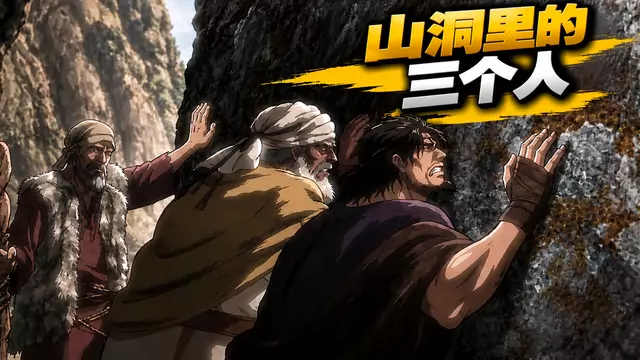
- 这个人请人指引他去找世上最有学识的人,却被指到一位修士那里。HadeethEnc 形容这位修士是一位“学识不多”的功修者,他认为这罪太大,不可能得到饶恕。[1][3]
- 《杜拉尔·萨尼耶》解释说,这位修士犯了两个错误:他把安拉的慈悯看得狭窄了,又在没有知识的情况下作出了教法判断。[5]
- 伊本·哈杰尔在《法特哈·巴里》(第6卷,第597页)中指出,故事里提到修士,说明此事发生在尔萨(愿主赐他平安)被升起之后,因为出家修行是他的追随者开创的。伊本·欧赛敏在《正义者园圃》注释(第1卷,第117页)中补充说,这位修士是一位没有知识的功修者,他觉得这罪太大,便回答说没有忏悔的余地。[7][9]
- 那位学者的回答恰恰相反:没有任何东西能阻挡一个人忏悔。他接着给出了切实的建议:离开你的故土,那是一片罪恶之地;到一个人们崇拜安拉的地方去,与他们一起崇拜祂。HadeethEnc 指出,他自己的村庄“看来是一片不信道之地”。[1][3]
- 伊本·哈杰尔(第6卷,第597-598页)解释了这个人为何杀死修士:修士的回答让他相信自己已无路可走,于是他对慈悯感到绝望;后来安拉抓住了他的心,他为自己的所为懊悔,又重新去打听。他还指出修士缺乏洞察:面对一个已把杀人当作习惯的人,他本应谨慎地作答。[7]
- 他在半路上死去。在穆斯林的传述中,慈悯的天使说,他是带着忏悔而来的,一心归向安拉;惩罚的天使则说,他从未做过任何善事。一位天使以人的形象来到他们中间,让他们丈量两地之间的距离。[1]
- 伊本·欧赛敏(第1卷,第117页)解释了学者的回答:忏悔之门是敞开的。这个人居住的地方似乎是一片不信道之地——安拉最知道——所以学者让他带着自己的信仰迁徙到一个人们崇拜安拉的城镇去。[9]
- 在布哈里的传述中,安拉命令他前往的那片土地靠近,命令另一片土地远离,结果发现他离那片土地近了一拃,于是他得到了饶恕。《杜拉尔·萨尼耶》称,这体现了安拉对祂的仆人宽广无边的慈悯。[2][5]
- 伊本·哈杰尔(第6卷,第597页)指出,在穆斯林的传述中,他把胸膛倾向那片土地这一细节,是在结尾由格塔德传自哈桑的,这表明它可能是传述人添加的内容,而不是先知话语的一部分。[7][1]
- 人们自然会问:他所杀之人的权利怎么办?《杜拉尔·萨尼耶》的回答是:人的权利不会不经清偿就被免除;但当安拉喜悦一个犯罪的人、接受他的忏悔时,祂会使受害的一方对他感到满意。[5]
- 奈瓦威(第17卷,第237页)解释了天使丈量距离一事:当事情对他们来说不明朗、他们意见不一时,安拉命令他们请一位路过的人来裁决,于是那位天使以人的形象经过,在他们之间作出了裁决。[8]
- 伊玛目奈瓦威将这段圣训收录在《正义者园圃》的“忏悔”一章(第20段)。[6]
- 伊本·欧赛敏(第1卷,第118-119页)解释说,杀人涉及三项权利。安拉的权利通过忏悔得到饶恕。被杀者的权利不会因凶手的忏悔而恢复,安拉将在复生日在他们之间裁决。受害者继承人的权利则要求凶手向他们自首、承认杀人,让他们可以选择抵偿、接受血金或宽恕。伊本·哈杰尔(第6卷,第597页)同样说,当安拉接受一个杀人者的忏悔时,祂会亲自使他的对方感到满意。[9][7]
- 关于学者们的立场:奈瓦威(第17卷,第236页)指出,有学识的人一致认为蓄意杀人者的忏悔是有效的,只有伊本·阿拔斯持不同看法;他还说,虽然这是前人民族的故事,但我们自己的教法也证实了这一点,并援引准则章的经文(25:68-70),这几节经文的结尾为忏悔者作了例外。伊本·欧赛敏(第1卷,第118页)称多数学者的观点是正确的,并说伊本·阿拔斯的观点可以理解为是针对被杀者的权利而言的。[8][9]
教益与收获
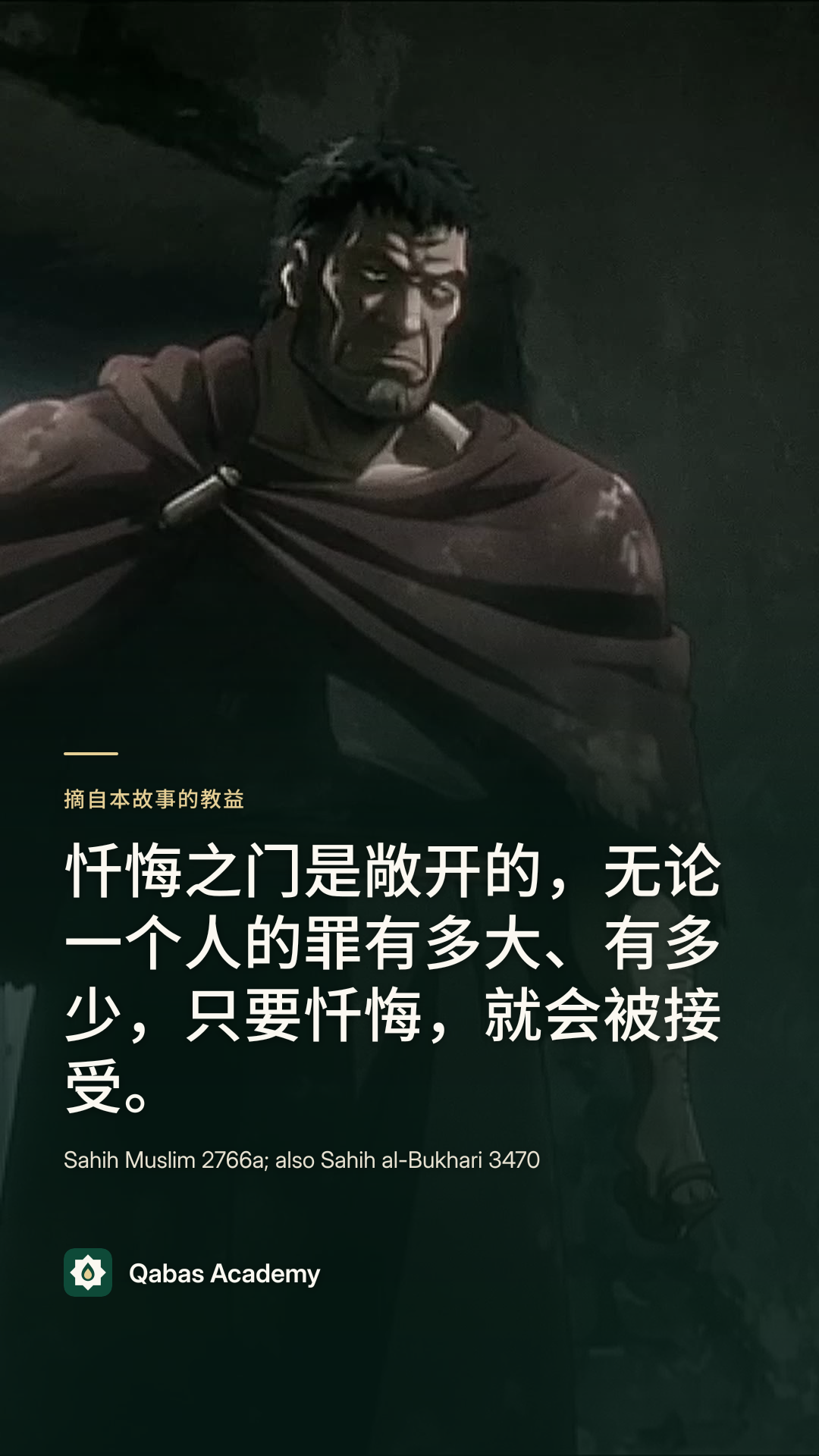
- 忏悔之门是敞开的,无论一个人的罪有多大、有多少,只要忏悔,就会被接受。[4]
- 每一种大罪都可以忏悔,即便是杀人。[7]
- 蓄意杀人者的忏悔是被接受的。[4]
- 有知识而功修少,胜过功修多而无知;学者优于功修者。[4][5]
- 劝人向善的人需要智慧:要看清什么能医治一颗心灵,并引导它走向希望,而不是绝望。[4]
- 坏的同伴是导致犯罪的最大原因之一,顺从安拉之人的陪伴则是促成顺从的最大原因之一。只要犯罪的人仍执迷不悟,就要远离他们;要与敬畏、有学识、行善的人为伴。[5][4]
- 忏悔的人应当离开他犯罪的地方,离开曾帮助他犯罪的同伴;只要他们仍执迷不悟,就远离他们,转而与善良、有学识、虔诚的人为伴,这会使他的忏悔更加坚定。伊本·哈杰尔补充说,他还应当抛下犯罪时期的种种习惯和处境。[8][7]
- 为了加入行善者的行列而努力、承受艰辛,是忏悔之心真诚的标志。[4]
- 作出教法判断的人也可能答错;没有知识而谈论宗教,后果严重。[7]
- 犯罪的人被敦促去忏悔,并被禁止对安拉的慈悯感到绝望。[5]
- 这段圣训支持仲裁的合法性:双方都认可的仲裁人所作的裁决,对双方都有约束力。[7][4]
思考题
这些问题由 Qabas Academy 撰写,帮助你思考。它们不是圣训或其注释的一部分。
- 修士和学者听到的是同一个问题。是什么让他们的回答如此不同?
- 学者让他离开自己的故土。在你身边,有什么让行善变得更难,又有什么让它变得更容易?
- 他在抵达之前就死去了。这对一生所朝的方向有多重要,说明了什么?
- 有没有一个人,你已经在心里悄悄认定他不可能改变了?
感悟卡片
一张卡片,载有本集的一条感悟及其出处,方便分享。